
Exploring the hidden layers of human experience.
Clinical psychologist, psychological profiler and writer exploring the meanings, relational dynamics and hidden emotional logic that shape human experience.
ABOUT
An archaeologist of the human psyche
Looking beneath the visible story.
My work sits at the intersection of clinical psychology, psychological profiling and writing. I am interested in the hidden emotional and relational logic that shapes how we experience ourselves, other people and the world around us.
Psychological profiling, as I understand it, is not about reducing a person to a type, a category or a recurring pattern. It is an attempt to understand the dynamic organisation of a person: how inner conflicts, meanings, defences, relational histories and adaptations come together, and how that organisation shifts across different relationships, contexts and moments in life.
Rooted in systemic and psychodynamic thinking, this perspective looks at the person both from within and in relation — to family systems, relationships, context, the body and the wider world. It asks not only what tends to repeat, but what a response means, what function it serves, what it protects, what history it carries and what possibilities for change it contains.
This way of looking has become the thread connecting my clinical work, my exploration of psychosomatics and my writing: an ongoing attempt to make what is hidden a little more intelligible, while preserving the complexity of the person.
EXPLORE MY WORK
Three ways of exploring what lies beneath
My work unfolds across three interconnected areas: psychological profiling, writing and experiential programmes. Each offers a different way of exploring the meanings, relational dynamics and inner organisation that shape human experience.
Whether I am working with a person, developing a profiling framework, writing or creating a programme, the underlying inquiry remains the same: to look beneath what is immediately visible without reducing complexity to a label, and to make what is difficult to see a little more intelligible.
SELECTED WRITING
Essays on psychology, meaning and the inner life
My writing follows many of the same questions that shape my clinical and profiling work: how we give meaning to our experience, how inner conflicts and relational histories organise the way we encounter ourselves, other people and the world, how the body enters the story, and what becomes possible when we look beyond what is immediately visible.
Across essays and longer-form projects, writing becomes another way of staying with the complexity and depth of human experience — following emotional layers, psychological tensions, relationships and embodied experience, while remaining curious about the meanings they carry and the ways they change across different moments and contexts in our lives.
LOOKING BENEATH THE SURFACE
An Archaeologist of the Human Psyche
On curiosity, observation and the lifelong impulse to look beneath the surface of human experience.
BEYOND CERTAINTY
Curiosity as an Act of Respect
On observation, perspective and the discipline of resisting premature certainty when trying to understand another person.
THROUGH DIFFERENT LENSES
The Reality Between Us
On subjective experience, the inner maps through which we understand reality, and why psychological profiling begins with perspective rather than labels.
INNER TIDES
Navigating Emotional Intensities
On emotional intensity, inner complexity and the layers through which we learn to understand, organise and move through what we feel.
PSYCHOLOGICAL PROFILING
Understanding the person beyond the label
Psychological profiling, as I understand it, is not about fitting a person into a fixed category. It is an attempt to understand the dynamic organisation of a person — the meanings, defences, emotional layers and relational histories that shape experience, and the ways this organisation shifts across relationships, contexts and different moments in life.
Systemic Psychological Profiling is the framework at the heart of Psychological Profiling in Everyday Life. A person cannot be understood in isolation from the relational systems in which they live and act. Family, intimate relationships, professional environments and wider social contexts shape how psychological organisation is expressed, reinforced and transformed. Profiling therefore explores not only a person’s inner organisation, but how they function within systems, what roles and responses emerge there, and how the same inner organisation may take different forms across different relational contexts.
DYNAMIC ORGANISATION
A psychological profile is not a static portrait. It reflects an organisation in movement — shaped by inner conflicts, defences, emotional meanings and relational experience, and capable of shifting as context, relationships and life circumstances change.
SYSTEMIC PROFILING
A person does not exist outside their relational world. Systemic profiling looks at how psychological organisation takes shape within families, intimate relationships, professional environments and wider social systems — and how roles, expectations and reciprocal responses can amplify, constrain or transform the way a person functions.
CONTEXTUAL MEANING
A behaviour, symptom or recurring response is not meaningful on its own. Profiling asks what it means for this person, what function it serves, what it protects and what history it carries before placing it within a category or explanatory model.
PRESERVING COMPLEXITY
Profiling holds multiple levels of experience at once. Traits, defences, emotions, bodily responses, relational dynamics and context are read together, so that no single feature is allowed to stand in for the whole person. The aim is not simplification for its own sake, but to make complexity intelligible without flattening it.
DYNAMIC ORGANISATION
A psychological profile is not a static portrait. It reflects an organisation in movement — shaped by inner conflicts, defences, emotional meanings and relational experience, and capable of shifting as context, relationships and life circumstances change.
SYSTEMIC PROFILING
A person does not exist outside their relational world. Systemic profiling looks at how psychological organisation takes shape within families, intimate relationships, professional environments and wider social systems — and how roles, expectations and reciprocal responses can amplify, constrain or transform the way a person functions.
MEANING BEFORE CLASSIFICATION
A behaviour, symptom or recurring response is not meaningful on its own. Profiling asks what it means for this person, what function it serves, what it protects and what history it carries before placing it within a category or explanatory model.
PRESERVING COMPLEXITY
Profiling holds multiple levels of experience at once. Traits, defences, emotions, bodily responses, relational dynamics and context are read together, so that no single feature is allowed to stand in for the whole person. The aim is not simplification for its own sake, but to make complexity intelligible without flattening it.
PROGRAMMES
From understanding to lived experience
My programmes create spaces in which psychological understanding can be explored through experience, reflection and practice. Across experiential workshops and groups, writing-based processes, and mentoring and training, I work with ways of making inner and relational dynamics more visible — giving them form, language and movement rather than leaving them only at the level of explanation.
Rooted in systemic and psychodynamic thinking, these programmes may draw on symbolic work, embodied awareness, reflective writing and creative methods. They offer enough structure to support exploration while leaving room for complexity, individuality and what emerges in the process — allowing experience to become not only something to understand, but something that can be observed, felt, questioned and transformed.
Experiential Workshops & Groups
Experiential spaces for exploring inner and relational dynamics through symbolic work, embodied awareness, group reflection and creative methods. These programmes invite participants to move beyond intellectual understanding and engage more directly with what becomes visible through experience.
Writing & Reflective Practices.
Writing can become a space in which we reflect, process emotion and give meaning to experience. Through guided writing, journaling and other reflective practices, these programmes create room to stay with inner complexity, follow emotional layers with greater clarity, and give form and language to what may initially feel diffuse, contradictory or difficult to articulate.
Mentoring & Tailored Training
Mentoring and tailored training offer spaces for deepening psychological understanding, refining professional judgement and developing more nuanced ways of working with complexity. Depending on the context, they may be designed for mental-health professionals, teams or organisations, with content and methods shaped around the questions, challenges and dynamics of each setting.
Selected programmes
Symbolic Constellation Work
Rooted in Virginia Satir’s systemic tradition and gradually developed into a symbolic method of my own, this work brings together systemic constellation principles, Systemic Psychological Profiling and the projective potential of the creative process. Participants create and often paint their own figures, working with colour, form, spatial positioning and other materials to give visible expression to inner and relational experience. Relationships, roles, loyalties, conflicts, emotional positions and unspoken tensions can then be externalised and observed from a different vantage point, allowing us to explore how a relational system is organised, what particular positions may protect or express, and how meanings shift as the configuration changes. The creative choices themselves are approached not as fixed symbols to be decoded, but as additional material for curiosity, reflection and psychological profiling. The aim is to open a space in which experience can be seen, questioned and reorganised without reducing it to a single interpretation.

Psynergetic Writing Cure
Psynergetic Writing Cure explores writing as a psychological and creative process through which experience can be observed, organised and given meaning. Drawing on reflective writing, guided prompts, symbolic exploration and psychological understanding, it creates a space in which emotional layers, inner conflicts and relational dynamics can be approached both consciously and indirectly. Writing becomes a way of staying with experience long enough to understand it more deeply, while giving form and language to what may initially feel diffuse, contradictory or difficult to articulate. Rather than prescribing what a story should mean, the process invites curiosity towards what emerges on the page and towards the meanings that become visible through the act of writing itself.
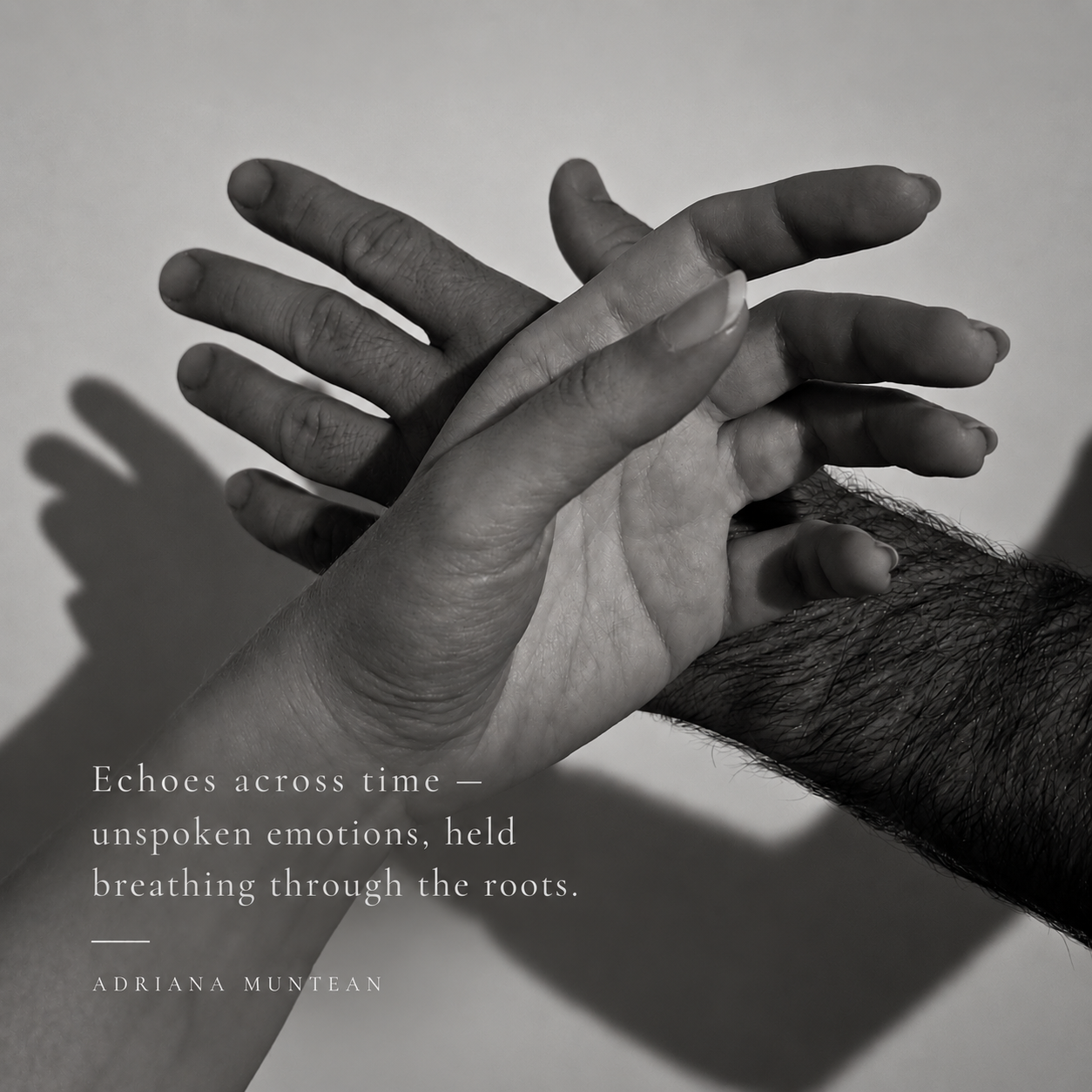
One expression of this approach is Haiku in Images, a project developed at the intersection of Psynergetic Writing Cure and photo-art therapy, in which words and images become parallel ways of approaching and giving form to emotional experience.
The Art of Authentic Living
The Art of Authentic Living is an experiential retreat centred on the exploration of authenticity as a lived process rather than an ideal to be achieved. Through reflection, embodied awareness, symbolic and creative practices and relational exploration, the retreat creates space to notice where inner experience and outer life have become disconnected, where adaptation has turned into self-abandonment, and where less visible or less accepted parts of the self are asking to be recognised and brought into a more conscious relationship with the way we live.
Systemic Psychological Profiling is one of the central lenses through which this exploration unfolds, allowing personal experience to be understood in relation to inner organisation, relational histories, roles, contexts and the systems to which we belong. Rooted in systemic and psychodynamic thinking, the process approaches authenticity not as the discovery of a single “true self”, but as a deeper encounter with the different parts, tensions, needs and contradictions that shape us — and with the possibility of living in ways that feel increasingly conscious, congruent and personally meaningful.

REFLECTIONS FROM PARTICIPANTS
From the work
“From the way we prepared the ‘stage’, to the positioning of the figures and the step-by-step exploration of each stage of the constellation, the whole process guided me so naturally towards understanding, accepting and integrating events from my past. Throughout the process, I had a strong sense of being safe. My mind and body felt aligned, working together.”
Symbolic Constellation Work participant
“Working with the figures creates a gentler and safer space, in which the pressure to feel something in a certain way or to ‘do the process correctly’ almost completely disappears. Seeing everything from the outside, with a little more distance, allows many things to become clearer and easier to understand, without becoming overwhelmed.”
Symbolic Constellation Work participant
RESOURCES
For deeper understanding
A growing collection of reflective materials, guided practices and practical resources designed to support deeper psychological exploration — individually, relationally and in everyday life.
WORKBOOK
Systemic Psychological Profiling for Couples
A practical workbook for exploring communication, relational dynamics and more conscious ways of responding within the couple. Through guided exercises and reflection, it brings the perspective of Systemic Psychological Profiling into everyday relationship experience.
JOURNAL
Psynergetic Emotional Reflection Journal
A guided emotional journal designed to create space for noticing, exploring and giving form to inner experience through writing. Across seven days, reflective prompts invite attention to emotions, bodily responses, recurring inner tensions and emerging meanings, encouraging a more curious and nuanced relationship with what is being experienced.
GUIDE
An Introduction to Systemic Psychological Profiling
Systemic Psychological Profiling is the framework at the heart of Psychological Profiling in Everyday Life. This introductory guide explores profiling beyond labels and fixed categories, looking at how meanings, defences, relational dynamics, personal history and context come together in the organisation of experience. Through questions, observations and everyday examples, it invites a more nuanced way of understanding people while keeping complexity, uncertainty and individuality at the centre of the process.
Contact
Let’s start a conversation
If you’d like to enquire about psychological profiling, programmes, mentoring or tailored training, collaborations, or my writing and related projects, you’re welcome to get in touch.
I read every message personally and will respond as soon as I can.